

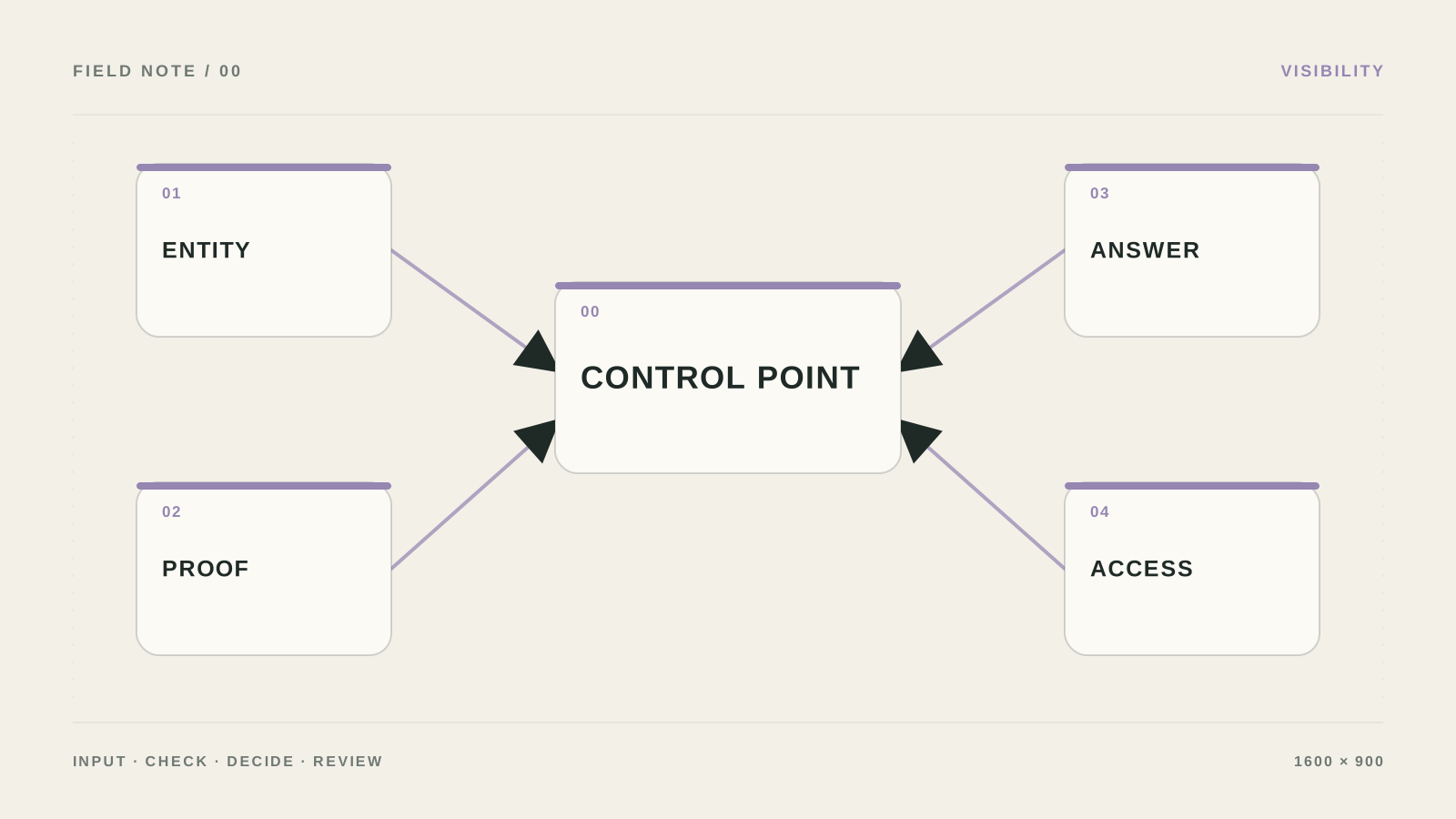
Make the business clear first—not merely “visible”
I would not try to “optimize a site for ChatGPT” with one new meta tag. I would first make a page that search engines and people can understand: who you are, which problem you solve, where that is proven, and where to go next.
The mistake I would remove first: Writing a separate page for every question variant.
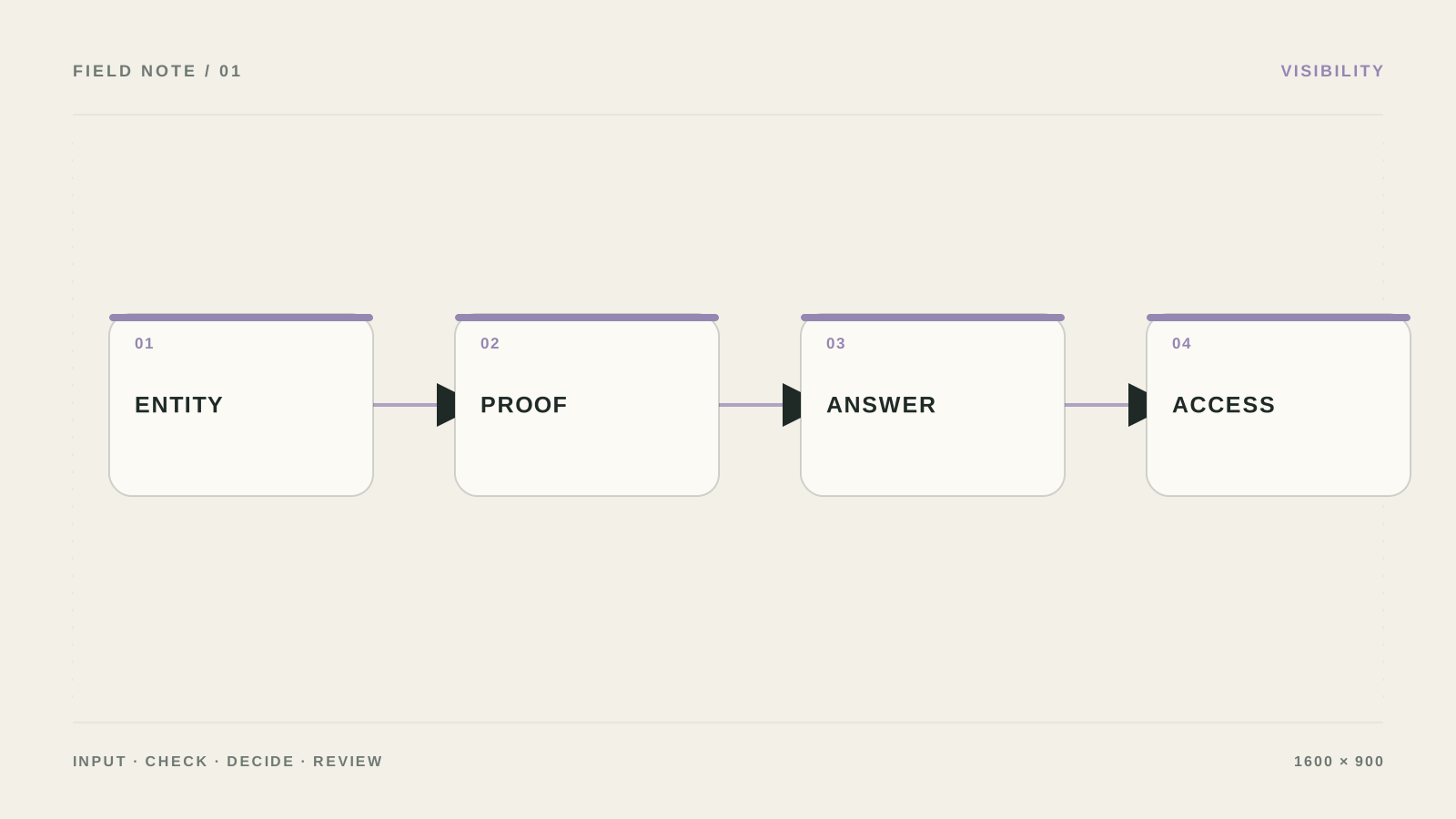
What to prepare and what result to expect
- Outcome: AI search has fewer reasons to invent details, and you can repeatedly check how the business appears for target queries.
- Build an entity list: company, services, people, regions, products, proof, and the pages that confirm them.
- Keep source data and access rights separate from the output so you can verify what business visibility work in AI search produced.
- Check robots, indexability, canonical, internal links, service pages, and an AI answer log for one fixed query sample.
Prepare the site for AI search answers
- Make facts available in HTML
Put the name, services, regions, terms, prices/ranges, authors, and case studies in text—not only on images or inside a closed widget.
Проверьте: A person and a crawler can read the key fact without clicking a JS component.
Если не сработало: Duplicate important data as plain HTML.
- Give each entity a page
The company, service, and key case study need a clear URL, H1, proof, and links to related pages. Do not create a separate URL for every query rephrase.
Проверьте: Each query has one best answer source.
Если не сработало: Merge duplicate pages and add internal links.
- Add verifiable proof
In a case study include context, constraints, process, and a measurable result. On a service page state what is included, who it is not for, and the next step.
Проверьте: The page answers “why trust you” with concrete facts.
Если не сработало: Replace generic promo copy with one real example.
- Keep an AI check log
Once a month save the platform, date, query, mention, link, position in the answer, and a screenshot. Compare a sample, not one random reply.
Проверьте: It is clear what changed after a page update.
Если не сработало: Do not judge visibility from one query or one account.
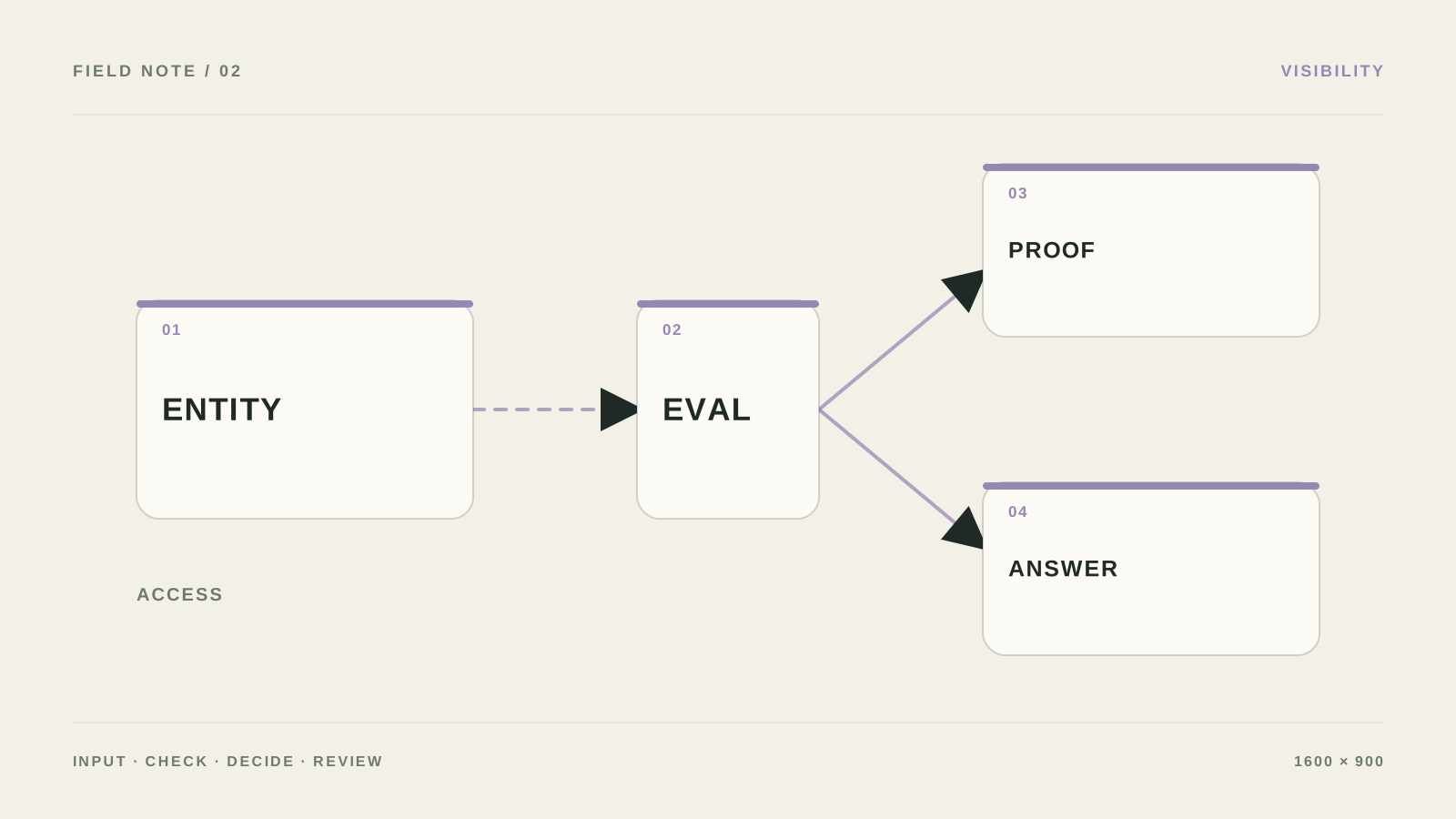
I build a business entity map
Put `brand_name`, `official_url`, `services`, `locations`, `people`, `proof_urls`, `contact_url`, and `last_verified` in a table. On the site these entities must match across Organization, About, Service, case studies, and contacts. Do not create ten pages with the same phrase—prefer one clear page with facts and links.
Each month ask the same set of questions in the AI search products that matter: who solves the problem, which services are mentioned, which sources are cited, and whether errors appear. Save the date, query, answer, and source URLs: one case is not a trend.
- Write direct answers to customer questions.
- Keep facts and prices current.
- Link commercial pages to proof and authors.
What you can actually improve
Check HTML accessibility, canonical, sitemap, Organization/Service schema, authorship, and case study pages. Remove contradictions: different phones, names, or addresses across pages. The goal is not to promise a slot in an AI answer, but to make the business correctly findable, recognizable, and verifiable.
I make AI search monitoring repeatable
Prepare 20 fixed customer questions and once a month record the platform, date, query, brand mention, position, cited URLs, and incorrect facts. Do not conclude from one answer or one account.
If the brand does not appear, check basics first: HTML accessibility, clear service pages, consistent company data, authorship, case studies, contacts, and links between them. There is no secret tag that guarantees a mention.
What helps more: entity, proof, or technical access
| Criterion | Question | Good sign |
|---|---|---|
| Input | What exactly goes into business visibility in AI search? | Build an entity list: company, services, people, regions, products, proof, and the pages that confirm them. |
| Action | What is the system allowed to do on its own? | Only pre-listed actions, without access to the entire account |
| Verification | How do you know the result is acceptable? | Check robots, indexability, canonical, internal links, service pages, and an AI answer log for one fixed query sample. |
| Failure | Where does an unclear case go? | Fix the source-of-truth page and technical accessibility instead of creating ten more similar articles. |
What should change after setup
AI search has fewer reasons to invent details, and you can repeatedly check how the business appears for target queries.
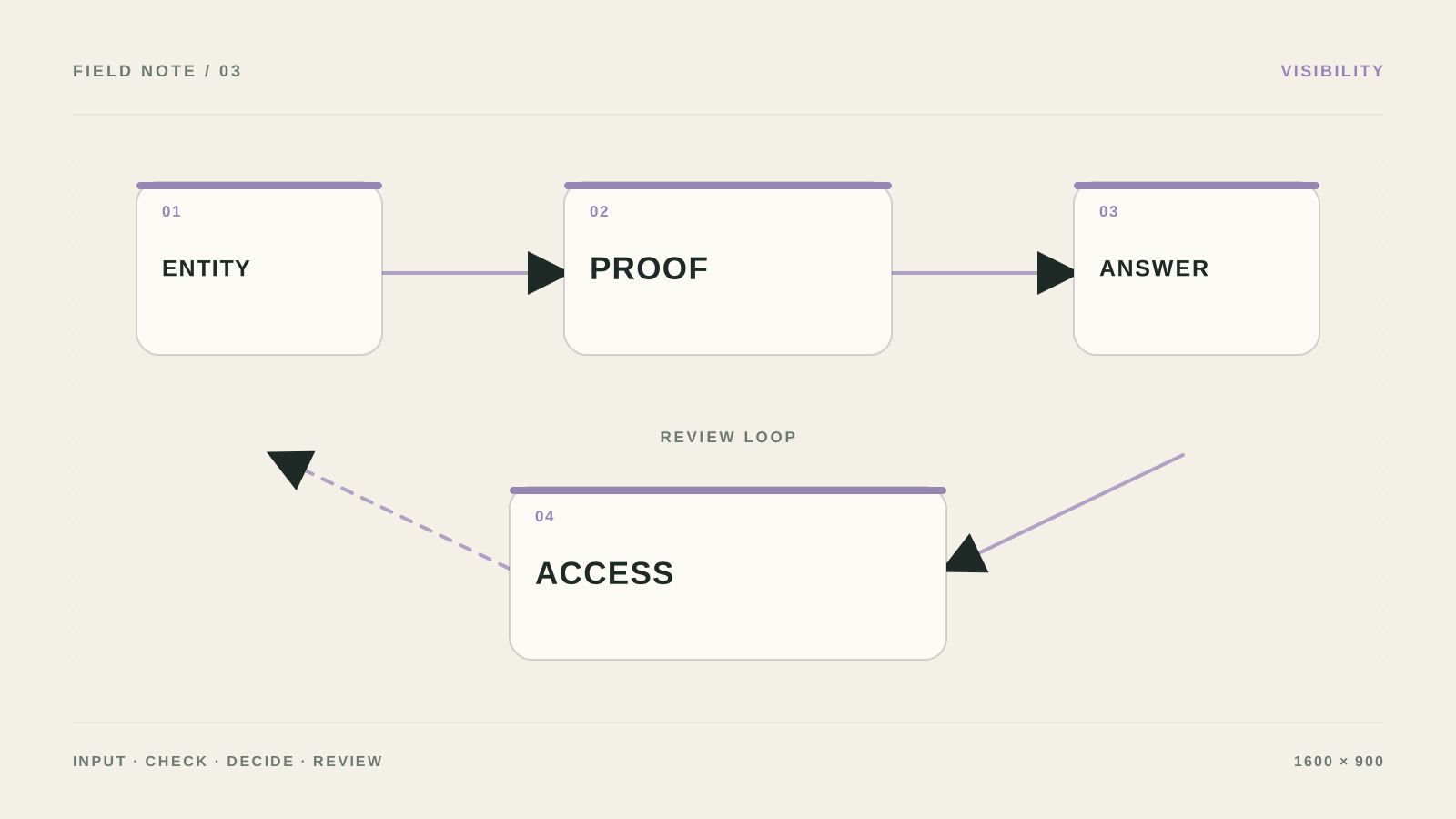
Why a hundred more articles do not make a business more visible
Writing a separate page for every question variant.
Relying only on schema and not improving the content itself.
Buying mentions without verifiable substance.
Treating one AI answer as proof of stable visibility.
When entity work and technical structure are required
Bring in a specialist if you need to connect entities across sites, locales, profiles, and external databases—or run a technical indexation audit.
How to check visibility without fooling yourself
Who is this approach to business visibility in AI search for?
There is no “appear in ChatGPT” button. You can make the business clear and verifiable: a crawlable site, clear entities, first-party facts, strong pages, and a connected technical structure.
Where do I start if everything is still done manually?
Build an entity list: company, services, people, regions, products, proof, and the pages that confirm them.
How do I check that the setup will not cause harm?
Check robots, indexability, canonical, internal links, service pages, and an AI answer log for one fixed query sample.
What if the result is unclear?
Fix the source-of-truth page and technical accessibility instead of creating ten more similar articles.